Max
That’s my boy Max. Hard working and happy. I can’t thank you guys enough for helping me with my dogs.
– Scott
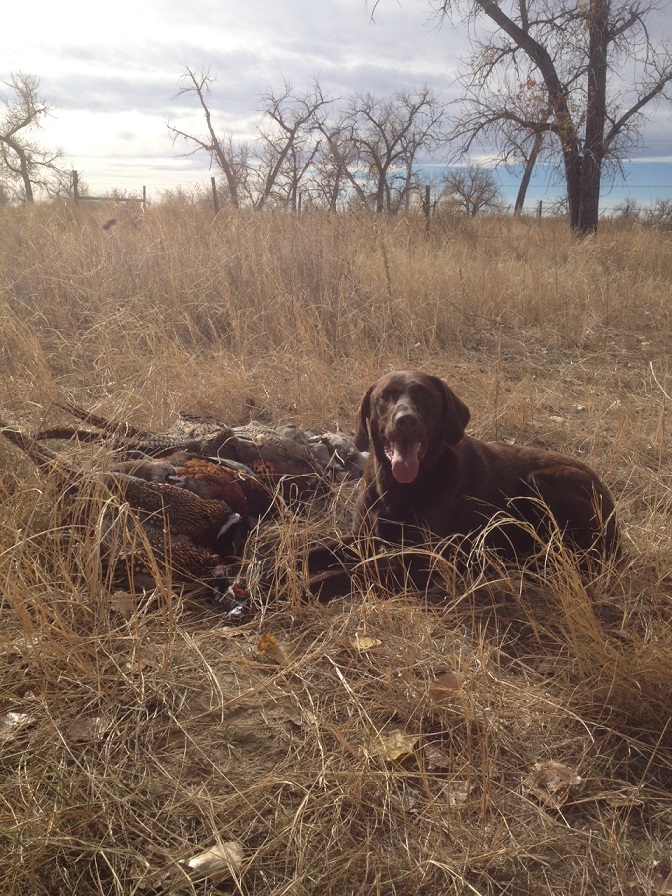

That’s my boy Max. Hard working and happy. I can’t thank you guys enough for helping me with my dogs.
Professional gun dog training takes time and patience. It also takes commit to a proven program, consistent handling, and a dog with a love of the game. Only when a dog masters one stage is it appropriate to move on and increase the difficulty, physical conditioning and command structure. So, what are the three stages of gun dog training and how do they benefit dog and hunter?
Contact us today for more information on the importance of the three-staged training approach. Moreover, find out what a dog with professional gun dog training under its belt will offer to you, the hunter, while in the field.
Gun dog training programs are key components when it comes to training a puppy or older dog in the fine art of quail hunting or the perfect handling of other game birds that you harvest. Yet where can you find the right type of help? While plenty of kennels might hang out shingles that claim to assist with gun dog training programs, there are some features that are found only with high-quality facilities and expert trainers. Do you know what they are?
Since you are wondering how to train a gun dog, talk to the friendly folks at Valhalla Bijou Hunt Club & Kennels. Contact us today for in-depth information on kennel rates, policies, reservations or just to tour the kennels for a closer look at what makes us different from the rest.
Hey Russ and Stephanie: The lead puppy looks like my dog Sue when she was a pup. By the way, Suzie, as I call her, has been an amazing joy. She is eight years old now and you would think she was three or four. Our season is over now and of course, she loves to hunt. She is the most tame and gentle dog I have ever owned, she is great with the kids (five granddaughters ranging in age 13 to 6). She has been the perfect pet for Pam and me. After a morning of hunting she is pretty tired and stiff. I try to keep her exercised everyday by walking a couple of miles. She doesn’t walk, she runs. The past couple of months I have been a little lax though and we get out three or four times a week. Suzie is amazingly obedient and she anticipates my every move. Sometimes I think she can read my mind. I tell you all this as an expression of my appreciation and in case a potential buyer asks about your breed and training. If you ever need a verbal affirmation about the quality of your dogs, I am happy to talk to anyone.
I’m addressing a question I get asked on a daily basis by clients, “How far should I let my dog range”. This is a reasonable question. First I’ll define range. This is the distance that your dog hunts in front of you. Let’s not over complicate this simple idea. I could break this down to breed specifics, talk about pointers vs. flushers, scenting conditions, wind directions, cover density, ect. For the sake of discussion I’m going to keep this as basic as possible.
I put a great deal of time into training a gun dog. I start each pup in a specific manner and methodically move them through the training process, with the ultimate goal being a finished gun dog. That being said, how far should we let them range? Simple, if I’m hunting and my dog is flushing birds out of gun range, the dog is too far out in front of me. If I’m hunting and the dog is pointing at greater distances, let’s say 200 yard out, sticking birds, holding them rock steady until the flush and shot, and making flawless retrieves, then that is a range the dog is capable of handling.
I think a better question to ask is “how do I control my dog’s range”? Whether you have a 40 yard bootlicker or a 200 yard rocket you still need to maintain control and adapt to conditions. I preach to my clients, that many people have sporting breeds but very few have hunting dogs and the difference is how the puppy is started from day one. So let’s remember the basics. We start off with every pup dragging a check cord. We do this for a reason. Yard work is the foundation for every future gun dog.
If we do not lay the foundation, range will be just one of the many problems you have with your dog. Maybe you need to go back to quartering drills to bring them into check. Maybe some reinforcement with the whoa command or sit to the whistle. All the simple drills we spent endless hours training before we transitioned the dog to the electronic collar need to be revisited. Remember guys, we should be able to drive our dogs through the field like high dollar sports cars. When a command is given we require an immediate response from our dogs or they are instantly corrected. So my general rule is I give my dogs enough rope to hang themselves. If they are doing great and sticking points I let them range. If they need to be brought in a bit we go back to our quartering and whoa work and the basic foundation we laid in the beginning.